

No matter which direction you choose to take in Ireland, you’re bound to come across warm hospitality, great food, scenic landscapes and some memorable off the beaten path adventures.
My most recent visit took me through the northern section of the country’s Wild Atlantic Way, with stops in Counties Mayo, Sligo and Donegal, then eastward along the coast of Northern Ireland, visiting Derry, Coleraine, Bushmills, the Causeway Coast and wrapping up in Belfast.
This year marks the 10th anniversary of the world’s longest-defined coastal touring route, The Wild Atlantic Way. It has become an internationally acclaimed road trip: 188 Discovery Points that stretch 2,500 kilometres along the contours of Ireland’s great western seaboard, from County Cork in the south to County Donegal in the north.
Our adventures along the Wild Atlantic Way started just outside the town of Westport, where we learned about foraging oysters at Croagh Patrick Seafoods. Owner Padraig Gannon showcased his sustainable seafood farm techniques, and welcomed us to his piece of coastal paradise.
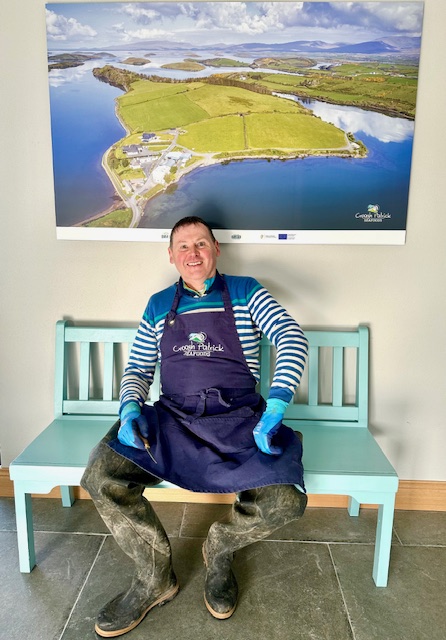
Padraig Gannon of Croagh Patrick Seafoods – You can see the farm’s stunning seaside setting in the photo behind him.
From there we experienced the Great Western Greenway by e-bike, pedalling part of the 49km pathway that provides picture-perfect views of the region’s mountains, farms, coastline and historic sites.

Pastoral scenes along the bike path on the Great Western Greenway.
The pathway goes all the way to Achill Island, home to Keem Bay, which has been named one of the Top 100 Beaches in the World. The beach itself is stunning, but getting there is half the fun, with a bendy road, grazing sheep on emerald green meadows, and incredible ocean views.
Movie goers will recognize Keem Bay from The Banshees of Inisherin, which figured predominantly in the scenes featuring Colm’s cottage. Several sites across Achill Island were used in the film, and I can attest the beach was just a stunning in real life as it was on the big screen.

Keem Bay on Achill Island was recently named one of the top 100 beaches in the world by Lonely Planet.
While a rainy morning may have derailed our planned Claggan Mountain boardwalk walk in Wild Nephin National Park, sometimes fate leads you to even better places. This park wasn’t on my radar before this trip, but it offers adventurers access to some of the darkest skies on the planet, and some of the wildest natural terrain in Ireland.

Michael Chambers has a wealth of knowledge about the history and wonders of Wild Nephin National Park.
Our guide Michael Chambers took us on a stroll through history, showcasing how the park can offer walkers and hikers experiences ranging from 2km strolls to 40km difficult journeys. The park has been restoring “bothy” cottages, which provide overnight shelter for hikers exploring the area. Its website provides comprehensive information on things to see and do, both day and night. The Park is also home to one of the most intact bog ecosystems in western Europe. While I have rarely given a bog a second thought, I learned about the bogs’ important place in history as an energy source for Irish homes and its importance to the larger ecological framework of the natural land today.
A quick stop in County Sligo let us indulge in a unique experience in Strandhill, by soaking in a traditional seaweed bath at Voya. Known for its detoxifying and moisturizing effects, the steaming hot bath filled with heated seawater and filled with pure seaweed was a welcome retreat after a whirlwind few days. Sinking into the tub, I cracked open the window to let in the sea breeze and sounds of the ocean waves while I contemplated how I could bring this same experience home to Alberta (not likely).
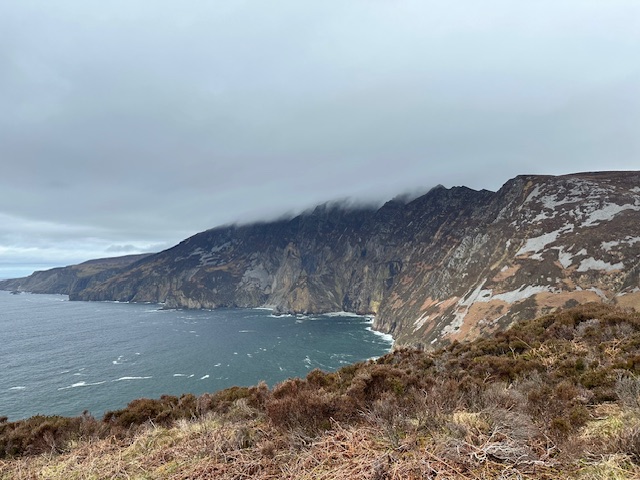
Sliabh Liag cliffs are dramatic, moody and yes, very tall.
One of the best kept secrets of the Wild Atlantic Way is Slieve League (Sliabh Liag) cliffs, located in County Donegal. While many flock to the Cliffs of Moher in County Clare to take in Ireland’s rugged coastal beauty, the cliffs at Slieve League (at 600m in height) are actually three times as tall as the Cliffs of Moher, and you have the added bonus of seeing some of Donegal’s wild landscapes and glens along the way.

The sitcom Derry Girls has become a global phenomenon, but the city has an even bigger story to tell.
Onwards from County Donegal, we landed in the historic city of Derry/Londonderry. The city has gained recent international acclaim thanks to the popularity of the Netflix sitcom Derry Girls (which is hilarious). Historically, Derry was the focal point of The Troubles, and there are several museums that depict the struggles of that time, including the Museum of Free Derry, and the soon to be completed Peacemakers Museum. Spending time learning about the region’s history provides an opportunity for reflection and compassion for the challenges in our world, past and present.
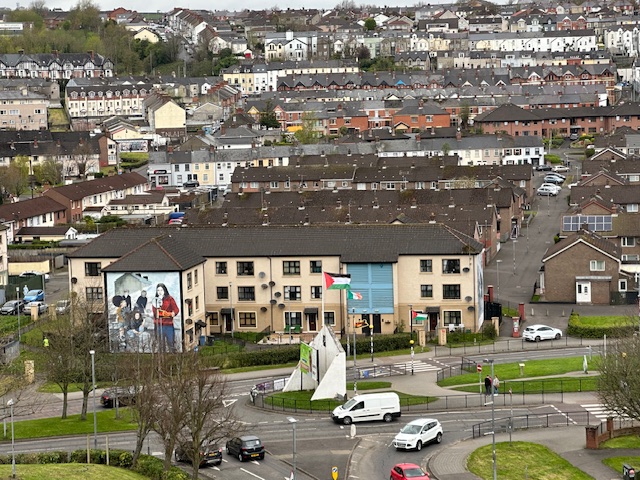
The city of Derry has a complex past. Today it is peaceful, vibrant and friendly.
I spent time some time pondering everything I had heard, seen and learned by walking the Derry walls, which encircle the city centre, and serve as another window to the city’s past. Built in the 1600s, the walls make Derry the only remaining completely walled city in Ireland.
Heading east, we ventured onto the Causeway Coast, one of my favourite areas of Ireland, with to its turquoise waters, expansive beaches and unique attractions. All within close proximity of each other, you can visit the dramatic setting of Dunluce Castle, sip some whiskey at Bushmills, the world’s oldest licensed distillery, walk the unique hexagonal-shaped stones at the Giant’s Causeway, and test your balance at the Carrick-a-Rede Rope Bridge, which originally dates back to 1755.
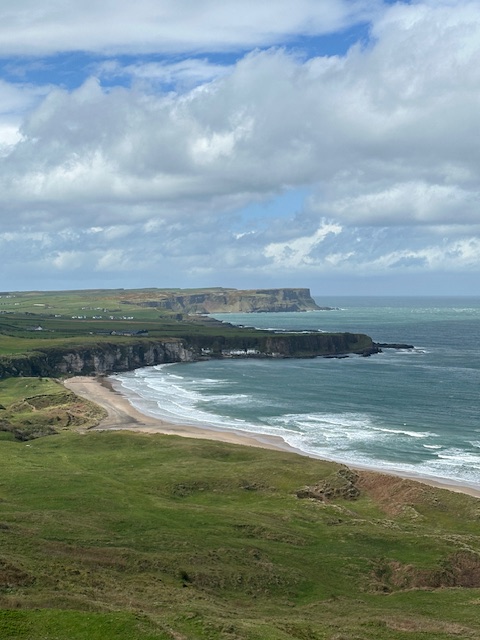
The Causeway Coast of Northern Ireland is full of charm and beauty.
The area also has a growing foodie scene, with plenty of local markets and farm-to-table restaurants. We had the chance to visit both farms and tables under the guidance of Wendy Gallagher from Causeway Foodie Tours. We capped off our day with a stay at the historic Bushmills Inn, where they flew the Canadian flag in honour of its guests (us!) who had travelled the furthest to stay there.
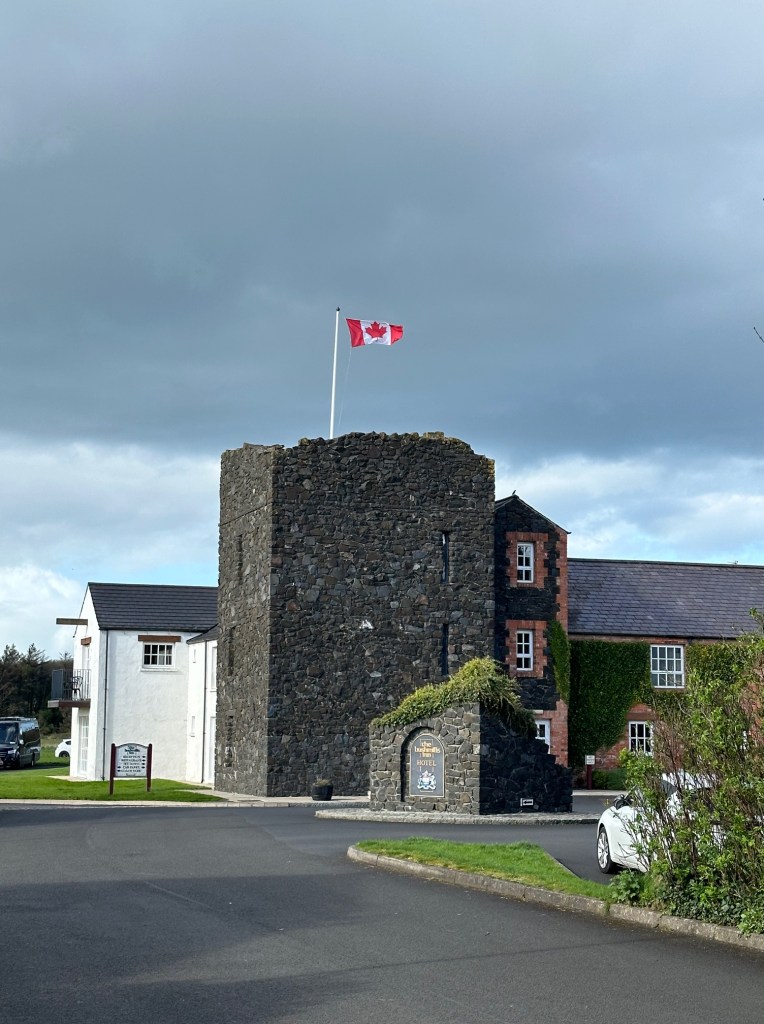

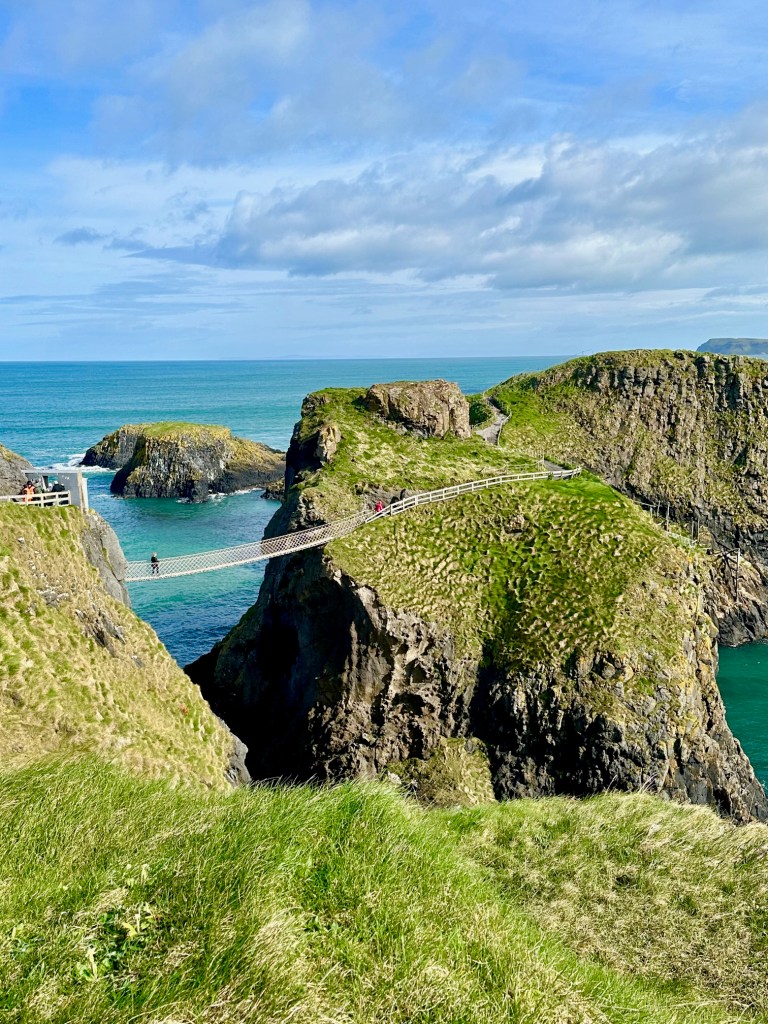
We felt right at home at the Bushmills Inn. The next day, we explored the Giant’s Causeway on a Sunday morning (no crowds), followed by a walk across the Carrick-A-Rede Rope Bridge.
Our trip wrapped up in colourful Belfast, with a stay at the Titanic Hotel and a special evening event at the incredible Titanic Belfast museum. The iconic ship was built in Belfast’s shipyards.

The Titanic Belfast building mimics the height of the bow of the famous ship.
Our visit coincided with the anniversary of the sinking of the Titanic, so the museum hosted “A Night to Remember“, with dramatic scenes from actors as they depicted stories from passengers and crew members from the ship. Guests also had a chance to meet with descendants of the ship’s passengers. It was a moving and haunting way to experience the museum and commemorate the lives saved and lost on its maiden voyage.
Ready for a trip to Ireland? I am! I’ll be back soon to visit the Galway region.
Visit Ireland.com to learn about the different regions and plot your next adventure.
Be sure to listen to my chat with Randy Sharman on The Informed Traveler to hear more about my Ireland adventures.

 wanders wild
A wonderful read – I felt as if I was right there with you!